Guide · Ekphrasis
How to write an ekphrastic poem about a painting
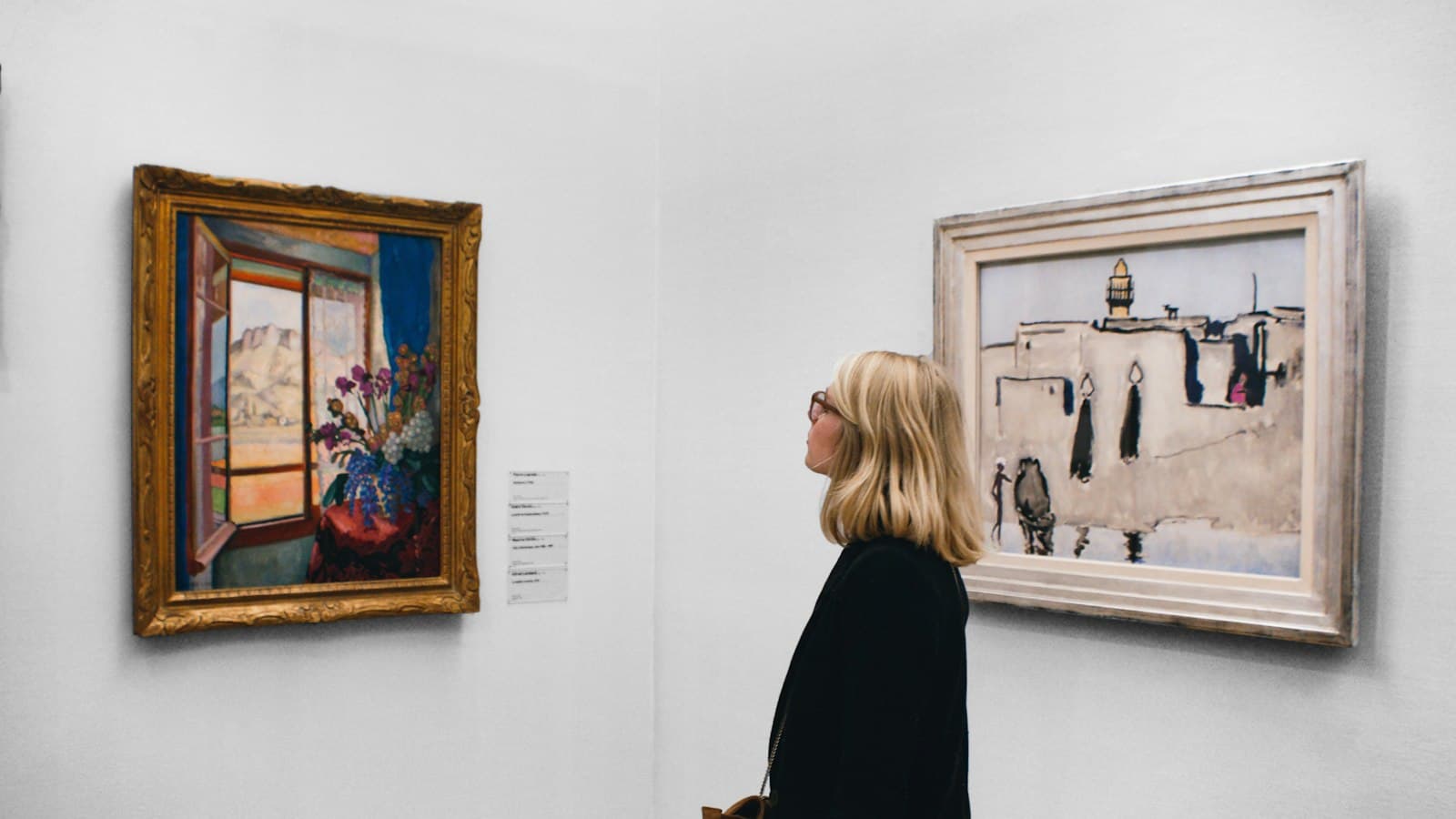
An ekphrastic poem is a poem written in response to a work of visual art. The weakest ones describe the picture. The best ones talk to it, question it, or step inside it, and come back with something the painter never painted.
Writing about a painting solves the hardest problem in a poetry lesson: what to write about. The subject is in front of everyone, it holds still, and it is full of details that students can point to. What they do with it is the poem.
What is an ekphrastic poem?
An ekphrastic poem is a poem that describes or responds to a work of visual art, such as a painting, sculpture or photograph. It may describe the work closely, speak to it, imagine a story behind it, or use it to think about something else.
The word comes from the Greek for "description". The Academy of American Poets defines ekphrasis as the use of vivid language to describe or respond to visual art, and gives one of the earliest examples: Homer's description of the making of Achilles's shield in book eighteen of the Iliad, which you can find on its teacher page. The same glossary notes that in the nineteenth and twentieth centuries the form moved away from elaborate description towards interpretation and questioning.
That shift is the useful one for students. Description is the starting point, not the goal.
How do you write a poem about a painting step by step?
Look at the painting for two full minutes before writing anything. List what you see, then what you cannot see but can imagine. Choose one way in, such as speaking to a figure in the painting, and draft from that angle. Cut any line that only repeats what a viewer can already see.
- Look slowly. Two minutes, no writing. Start at one corner and move across.
- List what is there. Objects, colours, light, figures, the weather.
- List what is not there. What happened just before? What is outside the frame? What can you hear?
- Choose a way in (see the next section).
- Draft. Ten to sixteen lines is plenty.
- Cut the caption lines. Any line a museum label could have written ("There is a field with red flowers") should go or change.
What are good ways into a painting?
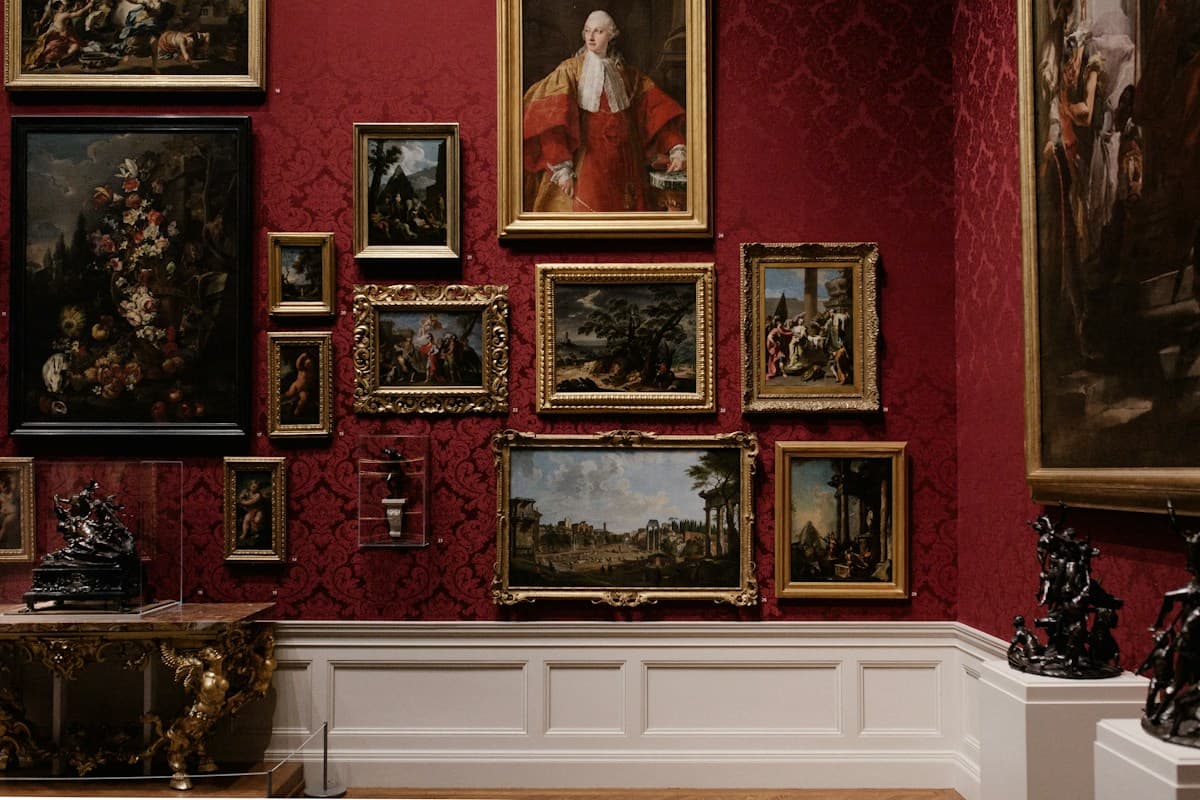
Five reliable ways in are: speak to someone in the painting, speak as someone in it, tell what happened just before or after, describe what lies outside the frame, or ask the painting questions it cannot answer. Each turns looking into imagining.
- Address. Talk to a figure, or to the painting itself. "You have been waiting at that window for a hundred years."
- Voice. Become something in the picture: the girl, the boat, the tree, even the light.
- Before and after. The painting is one moment. Write the minute before or the day after.
- Outside the frame. What is just to the left? Who is holding the brush?
- Questions. Ask what the painting will never tell you.
What does a good ekphrastic poem look like?
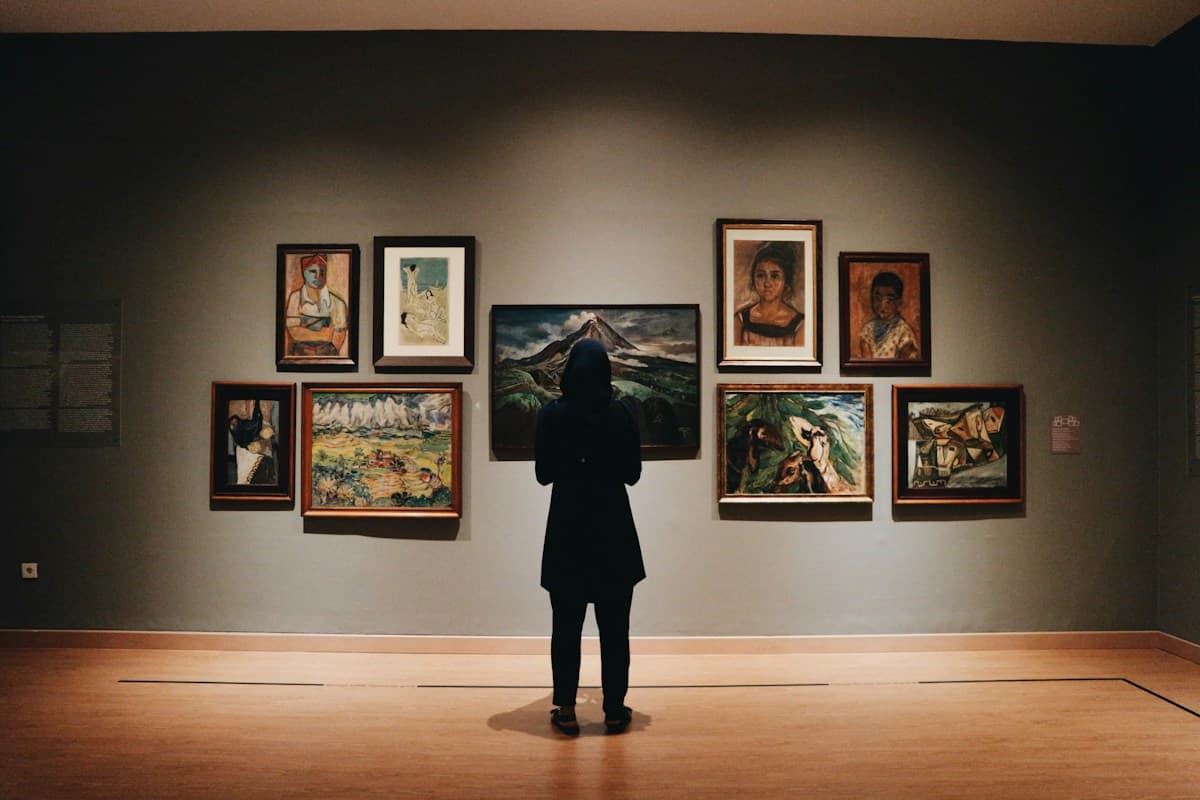
A good ekphrastic poem gives the reader enough detail to picture the artwork, then goes somewhere the image alone cannot. It often asks questions, imagines a life beyond the frame, or turns the artwork into a way of thinking about time or loss.
One of the best-known examples in English is Keats's "Ode on a Grecian Urn" (1820), addressed to an urn carved with figures rather than to a canvas. Its first stanza uses the last of the ways in above: it questions the image.
What men or gods are these? What maidens loth?
What mad pursuit? What struggle to escape?
What pipes and timbrels? What wild ecstasy?
Look at what the questions ask about. The table below takes them line by line.
| Questions | Line |
|---|---|
| 2 | What men or gods are these? What maidens loth?who are the figures |
| 2 | What mad pursuit? What struggle to escape?what are they doing |
| 2 | What pipes and timbrels? What wild ecstasy?what can be heard and felt |
The third line is the useful one for students. An urn cannot make a sound, yet Keats asks about pipes and timbrels. He has stopped describing what he sees and started asking what he cannot see. That is the move to teach: use a detail you can see to ask about one you cannot.
The poem then turns the frozen scene into an idea: the lovers on the urn will never kiss, but they will also never grow old. The whole ode is on its hand-out page, and it is the best single text for showing students that a poem about an object can be a poem about time.
How do you teach ekphrastic poetry to a class?
Project one painting and do the slow looking together, collecting details on the board. Model one way in aloud, then let students choose their own painting and their own way in. Display each finished poem beside its painting.
- Look together (10 minutes). One painting, projected. Students call out details; you write them on the board.
- Model (10 minutes). Write four lines aloud using one way in, such as questions.
- Write (25 minutes). Students pick a painting from a short selection and a different way in from the one you modelled.
- Gallery (5 minutes). Poems beside their paintings, read in silence.
By year level
- Years 5–6. One painting for the whole class. Use the "before and after" way in. Eight lines.
- Years 7–8. Students choose from five paintings. Require one question and one line from outside the frame.
- Years 9–10. Read Keats's first stanza first. Students write a poem that turns their painting into an idea, and a paragraph explaining the turn.
Public-domain paintings are the easiest to project and print. Find a text includes paintings as well as poems, such as Monet's Poppy Field and Hokusai's Under the Wave off Kanagawa.
What mistakes should you watch for?
The common mistakes are writing a caption instead of a poem, describing everything in the painting, and losing the painting entirely. A good ekphrastic poem chooses a few details, keeps the artwork present, and goes somewhere beyond it.
- The caption. "This painting shows a woman by a window." Ask what the woman is thinking.
- The inventory. Listing every object is description without choice. Ask for the three details that matter most.
- Losing the picture. A poem that never mentions the painting is a different poem. Keep at least one concrete detail.
- Choosing a famous painting nobody has looked at. Students who pick by fame often skip the looking. Make them do the two minutes anyway.
ekphrasis shows a public-domain painting from a museum collection and asks for a poem facing it, so students can look and write in the same place.
Sources
- Ekphrasis, Academy of American Poets. Checked 26 October 2026.